In brief
Lech-Lecha is the third parasha of the book of Bereshit. It opens the story of the first of the patriarchs, Abraham (still called Abram at the start of the account). G-d addresses to him a command that is brief and overwhelming: to leave his land, his kindred and his father's house, and set out for a land that He will show him. Abram obeys without question, at seventy-five years of age, and reaches the land of Canaan. The parasha then recounts his first trials: the famine and the descent into Egypt, the parting from his nephew Lot, a war of kings from which he rescues Lot, then two covenants sealed with G-d. It is there that the promise of offspring as numerous as the stars resounds, and that Ishmael is born. The parasha closes on the change of name (Abram becomes Abraham) and the commandment of circumcision.
Understanding it
The name Lech-Lecha comes from the first two words that G-d addresses to Abram: "Go for yourself." The whole parasha reads as the testing of a man who answers "yes" to a call whose destination he does not know. Three strong ideas run through it.
First, the departure (12:1): Abram leaves everything that holds him (land, family, house) on the word of G-d alone, without knowing where he is going. It is the act of faith on which the Jewish people is founded.
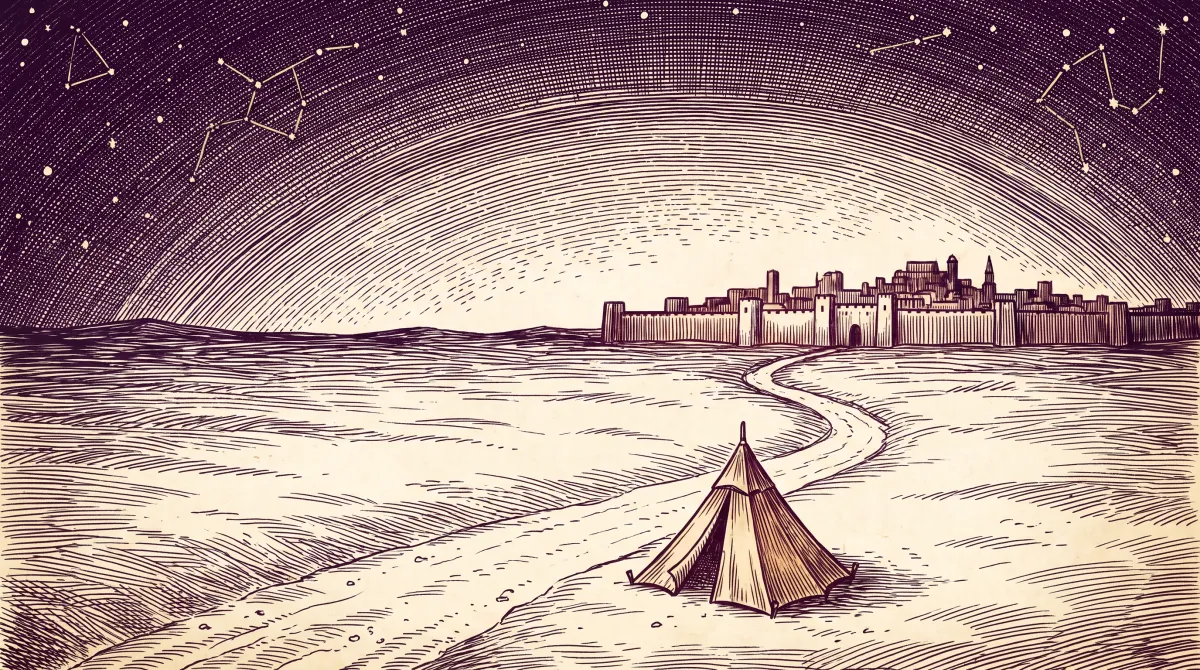
Next, the promise and the faith (15:5-6): G-d shows Abram the stars of the sky and promises him offspring just as countless. Abram believes, and this trust is reckoned to him as a merit: it is one of the summits of the Torah on faith.
Finally, the covenant in the flesh (17): G-d changes Abram's name to Abraham ("father of a multitude") and gives him the commandment of circumcision (the brit milah), the engraved sign of the covenant handed down from generation to generation.
Rashi's insights
Bereshit 12:1
וַיֹּאמֶר יְהֹוָה אֶל אַבְרָם לֶךְ לְךָ מֵאַרְצְךָ וּמִמּוֹלַדְתְּךָ וּמִבֵּית אָבִיךָ אֶל הָאָרֶץ אֲשֶׁר אַרְאֶךָּ
Vayomer Hachem él Avram, lekh lekha mé'artsekha oumimoladtekha oumibét avikha, él haarets acher aréka
Hashem had said to Abram: Go forth from your land, from your birthplace and from your father's house, to the land that I will show you.
The two words that give the parasha its name, "lekh lekha," are usually rendered "go away." But the second word, "lekha," means literally "for yourself." Rashi rests on this nuance: the command to leave everything is not a punishment, it is "for your own good and for your own benefit." G-d adds a reassuring reason: there, on this new land, Abram will become a great nation, which he would not have obtained by staying.
Bereshit 12:5
וְאֶת הַנֶּפֶשׁ אֲשֶׁר עָשׂוּ בְחָרָן
Vé'ét hanéfech acher assou vé'Haran
and all the possessions and the people they had acquired in Haran
The verse speaks of the "souls they had made in Haran," a strange expression: one does not "make" people. Rashi explains it through a teaching of the sages: Abram and his wife would bring people closer to G-d, he the men, she the women. To bring them under the wings of the Divine Presence (the Shechinah) was as if giving them a second birth: the text puts it beautifully, "as though they had made them."
Bereshit 15:5
וַיּוֹצֵא אֹתוֹ הַחוּצָה וַיֹּאמֶר הַבֶּט נָא הַשָּׁמַיְמָה וּסְפֹר הַכּוֹכָבִים
Vayotsé oto ha'houtsa vayomer, habét na hachamayma ousfor hakokhavim
He brought him outside and said: Look now toward the heavens and count the stars
Anxious at having no child, Abram had read in the stars that he would remain without an heir. Rashi reports that G-d brings him outside and says to him: "Step out of your reading of the stars." Abram, as he is, cannot have a son; but G-d will rename him, and with this new name, the destiny foretold by the stars changes. The message is powerful: the fate read in the sky does not govern the life of a man faithful to G-d.