"You shall call Shabbat a delight" (Yeshayahu 58:13). Shabbat is not only its prohibitions: it is a day to be savored. Four verbs sum it up:
- Zachor ("Remember"): the Kiddush and the Havdalah
- Shamor ("Observe"): keeping clear of the forbidden labors
- Kavod (honor): readying the home, dressing with dignity
- Oneg (delight): the meals, the rest, the songs
The Kiddush: קִדּוּשׁ
We sanctify the day in words, over a cup of wine, before the Friday evening meal. At Shabbat lunch, a shorter Kiddush comes before the meal: the kiddusha rabba. Two rules worth knowing:
- If there is no wine in the evening, the Kiddush is made over the two loaves of the meal.
- The Kiddush is made where one eats: no Kiddush without a meal on the spot.
The three meals: the two loaves
Three meals honor Shabbat: Friday evening, Shabbat lunch, and the seuda shelishit (the third meal) between Mincha (the afternoon service) and nightfall. The first two begin with two whole loaves (lechem mishneh), recalling the double portion of manna that fell on Fridays in the wilderness. At the table: the zemirot (songs), and in Birkat Hamazon (the blessing after the meal), the Retzeh passage.
At the third meal, the number of loaves varies from one community to the next: two whole loaves, or a single one. Follow your own custom, or ask your rav. Shulchan Aruch Orach Chayim 291:4.

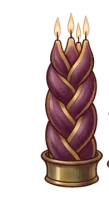
The Havdalah: הַבְדָּלָה
Once Saturday night has fallen, the Havdalah "separates" the holy from the ordinary. Four blessings, in order: the wine, the spices, the flame (a braided candle: "the lights of the fire," in the plural), and the separation. Practical markers:
- Between the end of Shabbat and the Havdalah, one neither eats nor drinks (water is allowed).
- A labor forbidden on Shabbat (a melacha) that cannot wait, before the cup? First one says baruch hamavdil bein kodesh lechol.
- On Saturday night we escort the queen out with a meal: the melaveh malka.
All four blessings open the same way: it is their ENDING that changes, and that is where people get it wrong.
Baruch ata Hashem, Elokeinu melech haolam, borei peri hagafen (the wine)
Baruch ata Hashem, Elokeinu melech haolam, borei minei vesamim (the spices)
Baruch ata Hashem, Elokeinu melech haolam, borei me'orei ha'esh (the flame, "the lights of the fire", in the plural)
Baruch ata Hashem, Elokeinu melech haolam, hamavdil bein kodesh lechol... (the separation)
Shulchan Aruch Orach Chayim 296.
Visual "a5-havdalah" unavailable.
The extra soul
On Shabbat, each person receives a neshama yeteira, an extra soul that withdraws when the day departs: it is this soul that the spices of the Havdalah console. Not to be confused with pikuach nefesh (danger to life, which pushes Shabbat aside): two distinct ideas, often muddled together.
 Key points
- Kiddush: over wine, before the meal, where one eats; if there is no wine, over the loaves
- 3 meals, two loaves at the first two (double manna), Retzeh in Birkat Hamazon
- Havdalah: wine, spices, flame, separation; nothing eaten beforehand
- Spices = consoling the departure of the neshama yeteira
- Melaveh malka: the meal that escorts the queen out
Sources: Shulchan Aruch Orach Chayim 271-274 (Kiddush, loaves), 289 (daytime Kiddush), 291 (seuda shelishit), 293-300 (departure, Havdalah, melaveh malka) · Talmud Beitza 16a · Yeshayahu 58:13.