Shabbat is welcomed like a queen: everything that makes it sweet (light, warm food, a peaceful home) is made ready on Friday. Once Shabbat has come in, we no longer cook, kindle, or adjust anything. Preparing is therefore a mitzvah in its own right, the kavod (honor) of Shabbat.
Honoring the day starting Friday
Shopping, cooking, cleaning, bathing, Shabbat clothes, a set table. The Talmud (Shabbat 119a) tells how the greatest Sages made a point of preparing something with their own hands: Rava would salt the fish, Rav Chisda would cut the vegetables. Taking part in person, even with a small act, is part of the honor of the day.
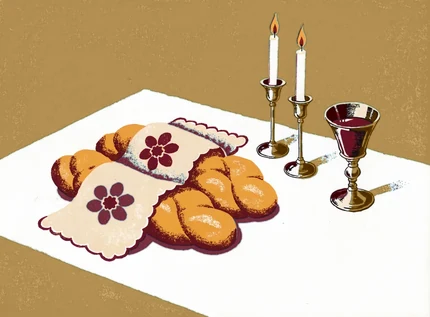
The candles: הַדְלָקַת נֵרוֹת
- Why: the light brings peace to the home (shalom bayit) and the delight of Shabbat.
- Who: the mitzvah falls to the household; the woman of the house kindles on its behalf, while someone who lives alone kindles for themselves.
- How many: the widespread custom is two candles, echoing the Torah's two verbs, "Remember" (zachor) and "Observe" (shamor). Some families add a candle for each child.
- When: about 18 minutes before sunset (40 in Jerusalem), following the time on the local calendar. Once the sun has set, one no longer kindles.
- The blessing: lehadlik ner shel Shabbat. Whether one recites the blessing before or after kindling varies from community to community: follow your own custom.
- By the prevailing custom, the one who kindles accepts Shabbat when she lights.
The text of the blessing:
בָּרוּךְ אַתָּה ה' אֱלֹקֵינוּ מֶלֶךְ הָעוֹלָם אֲשֶׁר קִדְּשָׁנוּ בְּמִצְוֹתָיו וְצִוָּנוּ לְהַדְלִיק נֵר שֶׁל שַׁבָּת
Baruch ata Hashem, Eloke-nu melech haolam, asher kideshanu bemitzvotav vetzivanu lehadlik ner shel Shabbat
Blessed are You, Hashem our G-d, King of the universe, who sanctified us with His commandments and commanded us to kindle the light of Shabbat.
The onset of Shabbat: the tosefet
Shabbat begins before sunset: we add ordinary time to sacred time (Tosefet Shabbat). The exact moment appears on the community calendar. By then, everything is ready.
Cooking: keeping food warm without cooking
- The plata (a Shabbat hot plate) or the blech (a sheet of metal over the flame) keep already-cooked food warm, set in place before the onset of Shabbat. Nothing is adjusted once Shabbat has begun.
- Returning a pot to the heat during Shabbat (chazara) is bound by precise conditions, and customs differ: ask your rav.
- The slow-cooked midday dish (dafina, also called skhina, hamin or cholent depending on the community) cooks from Friday on: eating it hot at Shabbat lunch, without any cooking on Shabbat itself, is part of the day's delight.
The practical steps on Friday
Timers set for the lights, the water urn filled and plugged in, paper torn in advance, phone switched off and put away, oven and burners turned off. Whatever cannot be done on Shabbat is done beforehand.

Customs
Kindling the candles
The law
- Kindle before sunset; once the sun has set, one no longer kindles.
- Blessing: lehadlik ner shel Shabbat.
Common practice
- Two candles; the one who kindles accepts Shabbat when she lights.
Depends on your community
- Some families add a candle for each child.
- Reciting the blessing before or after kindling varies from community to community: follow your own custom.
Returning a dish to the heat during Shabbat (hazara) follows precise conditions and customs differ: ask your rav.
 Key points
- Preparing is a mitzvah: the kavod of Shabbat
- Candles: about 18 minutes before sunset, blessing lehadlik ner shel Shabbat
- Tosefet: Shabbat begins before sunset
- Cooking: everything is cooked and in place before the onset; the plata keeps food warm, it does not cook
- Timers, urn, paper: the practical steps are done on Friday
Sources: Talmud Shabbat 119a · Shulchan Aruch Orach Chayim 250-263 (preparations 250-252, plata 253, tosefet 261, candles 263) · Kitzur Shulchan Aruch, hilchot Shabbat.